русский
 español
 francés
 عربى
عربى
 português

Can Your Blown Film Machine Only Make One Product? You Could Be Wasting Half Its Capacity.
When investing in a blown film machine, buyers often focus first on price and output. For manufacturers looking to manage their initial investment and expand their business, another question deserves attention:
Can the same machine produce more than one type of film?
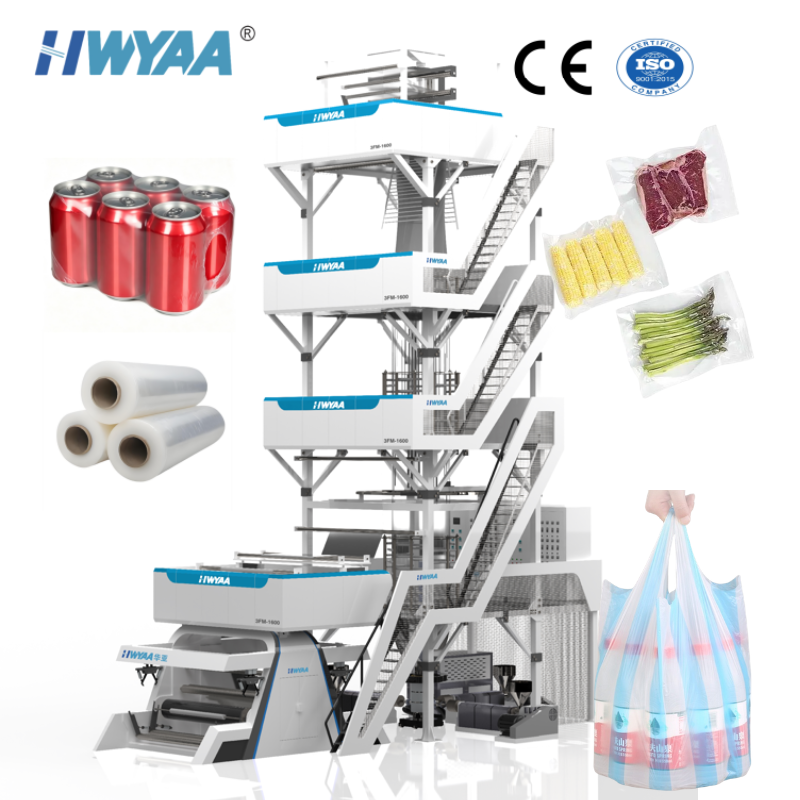
General-purpose PE packaging film and conventional PE heat-shrink film can be planned together. With suitable equipment, resin formulations and processing adjustments, one PE blown film line can switch between these two products, giving manufacturers more options for customer orders.
Conventional industrial PE shrink film can be produced using a single-bubble blown film process, which provides the foundation for this dual-purpose capability.
Same Material Family, Different Packaging Functions
General-purpose PE packaging film is widely used for bags, liners and protective packaging. Its key requirements typically include strength, clarity, heat-sealing performance and suitability for downstream converting.
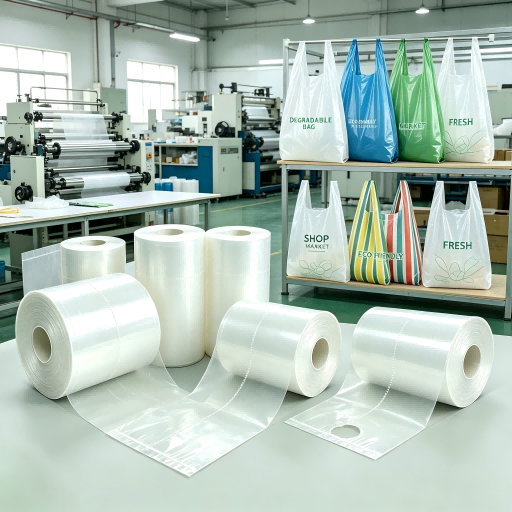
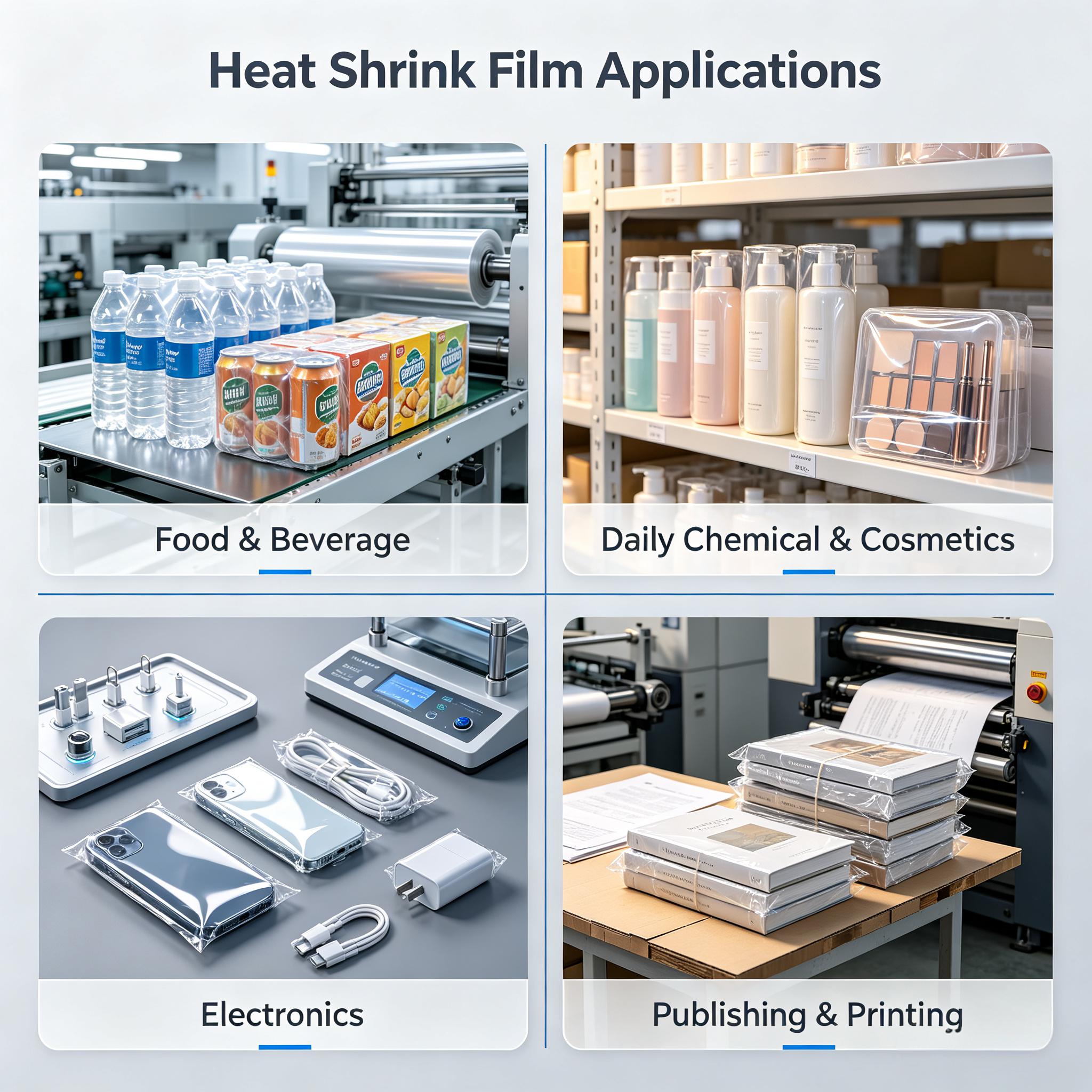
PE heat-shrink film contracts when heated, wrapping tightly around the packaged products. Common applications include beverage multipacks, cartons and pallet loads. Alongside strength, it needs shrinkage and shrink force appropriate to the application.
Although both products use polyethylene, they do not necessarily use the same formulation or processing settings. Reliable production requires resin selection and machine settings to work together.
How Does One Machine Produce Both Films?
1. Adjust the Resin Formulation
For general packaging film, manufacturers select resin blends according to requirements such as clarity, toughness and sealing performance.
For PE shrink film, the formulation must also deliver the required shrink behavior. Common approaches use LDPE blended with LLDPE or other performance PE grades to balance shrink performance, strength and processing stability.
The appropriate blend depends on the resin grades, film thickness and packaging application, and should be confirmed through production trials.
2. Coordinate Bubble Expansion and Haul-Off
During blown film production, the molten tube expands sideways while being drawn upward. These actions create molecular orientation in the film.
For shrink film, suitable stretching and cooling conditions preserve enough orientation for the film to contract when reheated.
The blow-up ratio, or BUR, influences orientation in the transverse direction. Drawdown influences orientation in the machine direction. Both must be considered alongside the die gap, melt temperature and cooling conditions.
Changing the blow-up ratio alone does not automatically turn packaging film into shrink film. The complete processing setup determines the final result.
How Can a Different Die Expand the Product Range?
Die diameter determines the blow-up ratio at a given film width.
For example, when producing film with a layflat width of 1,000 mm:
Die Diameter | Approximate Blow-Up Ratio |
250 mm | 2.55 |
350 mm | 1.82 |
At the same layflat width, a smaller die produces a higher blow-up ratio, while a larger die produces a lower ratio. This gives manufacturers another way to adjust processing conditions.
However, shrink film does not universally require a larger or smaller die. The choice depends on the required machine-direction and transverse-direction shrink performance, together with the overall process.
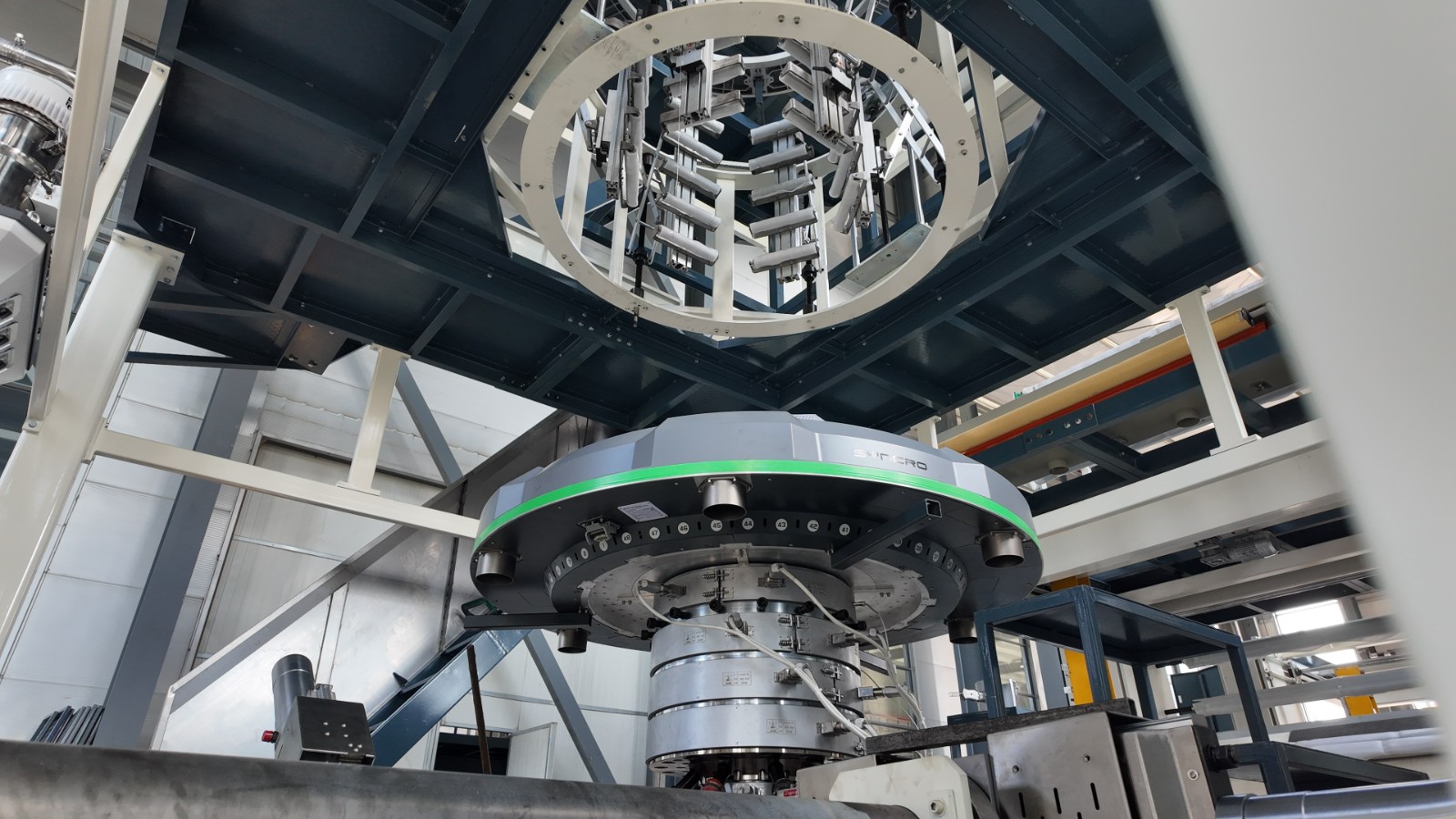
Two equipment approaches can be considered:
·
Use one die for both products: Where film widths, thicknesses and processing requirements overlap, switching may mainly involve formulation and setting changes.
·
·
Provide interchangeable dies or die-lip components: Where the product range is wider, alternative components can extend processing flexibility. Compatibility with the air ring, bubble stabilizer and haul-off system must also be checked.
·
The aim is to cover the intended orders while keeping operation and maintenance practical.
What Does This Mean for Cost-Conscious Buyers?
Reduce Duplicate Investment
If both products can share one production line, manufacturers may avoid purchasing a second complete machine and reduce the associated space and installation requirements.
Actual savings depend on the additional equipment needed and the production capacity required for each product.
Expand Order Opportunities
A suitable dual-purpose line allows manufacturers to serve both general packaging and shrink packaging customers.
This broader product capability can help a business respond to changing demand and schedule production around available orders.
Develop the Business in Stages
A new manufacturer can begin with familiar products and existing customers while planning the equipment for future shrink film production.
Formulation development and production trials can then support expansion as new opportunities arise.
Production planning should account for material changes, machine adjustments and any necessary component replacement between batches.
HWYAA: Plan the Machine Around Your Products
For buyers considering both PE packaging film and PE shrink film, the best starting point is to define the target width, thickness and output for each product, together with the shrink film application and required shrink performance.
HUAYA Machinery, under the HWYAA brand, can work with customers to discuss suitable configurations and verify product performance through production trials.
Good value comes from both the purchase price and the machine’s ability to serve actual orders and support future business growth.
Planning a PE blown film project? Share your target specifications or sample details with HWYAA so we can assess a suitable production solution.